Sarajevo Residency [un]context
![Sarajevo Residency [un]context](/media/cache/ef/d3/efd327ff4def99cfad57b0be5a953593.webp)
Residency acts as a research base about the possibilities of Sarajevo’s sustainable urban transformation - after the on site research in Sarajevo, LINA Fellows are going to undergo a 2 month long period of individual work that will result in an output formatted as an exhibition that will be showcased as part of LIFT’s Days of architecture Sarajevo 2023: The Olympics of Regenerative Architecture programme set from 15th until 22nd September this year.
Fellows will produce material that will be organized in an exhibition that will gather not only their work but also some of the work done in their LINA projects by Members (TU Wien, Maxxi) alongside work done by young local architects. The exhibition will aim to gather all these different actors under what we highlight as one of the most important LINA values which is creating local and international partnerships in order to come up with different strategies and solutions to make architecture a more sustainable tool for local communities.
Nights of Architecture
Using Nights of architecture as a core event around the Residency was a perfect opportunity to introduce LINA Fellows to our work methodology, where they not only exchanged ideas with our team and local community but they participated as well through means of lectures. We wanted to bring closer different local and international actors which aligns with core LINA values. Nights of architecture Sarajevo x LINA: (un)context @Manifesto, gallery of contemporary arts 26.05.2023. was organized as a series of lectures given by our LINA Fellows followed by lecture from our local young architects Nikola Ostojić, Edin Zoletić and Alma Huremović and members of our LIFT team culminating with an informal panel discussion/talk where we wanted to underline the importance of discussing and exchanging ideas with the local community.
Nights of architecture Sarajevo x LINA: (un)context was a base event that followed the development of the Residency where we put focus on research through an internal workshop. Bringing LINA Fellows to Sarajevo was an important way of bringing our organization’s context closer to LINA Fellows that follows our core statement that “Sarajevo is our playground”. Through a 5-day long Residency formatted as a research workshop, we wanted to provide LINA Fellows with a base for a quality information output that follows an important knowledge exchange from us to them and vice versa, highlighting the importance of discussing and discovering different points of view.
Collaboration with LINA Fellows: Sarajevo Residency
Juraj Neidhardt, in the introductory text for the literary masterpiece "Bosnia and Herzegovina and
Journey to Modernity", argued that Bosnia and Herzegovina is starting anew building a nation and its cultural pattern. Since that, at least two more complete renewals and complete changes in management and strategy have taken place. It is easy to conclude that the only continuity is discontinuity. And indeed, people here are inclined towards an inventive architectural approach and a view of non-mending architecture.
The first clearer and, today, tangible forms of housing organization from the Ottoman period hint at a warm and intimate relationship with the neighbor, which already cancels the new Austro-Hungarian relationship in slang terms, grows up in scale and adolescently surpasses the older brother. That 1:1 scale model of the city of Austro-Hungarian and an urban planning experiment for the needs of Vienna straightens, tightens and beautifies the chaotic individually organized space after just a few decades. There is very little similarity in the layers, which is certainly something that architecture of Vienna tried to hide with certain formalisms, but essentially- it establishes a new language. After the destruction of the Second World War, and with a slightly offset beginning of the industrial revolution in Bosnia and Herzegovina, Sarajevo begins a new process of strategic planning. The orthogonal blocks are now replaced by an approach that contains traces of domestic expression and, interestingly, learns from the first layer (Ottoman), rather than the most recent one. Nevertheless, the expression is authentic, original, and modern with a gable roof. Is this a rarity in European context, or what? But even the socially sensitive architecture, with the clearly visible ideals of the Communist Party does not last long.
The earthquake in Skopje changes the paradigm, concrete climbs to the pedestal of the most beloved tools of the time - houses are once again gathered into blocks, architecture puts on its arrogant heels and winds over its surroundings. Certainly, the last phase implies the transition and post-transitionera. A whole new level of ignorant #FU■KIT approach to anything. Mischievous laughs are directed at the architecture as it takes on an unusual shape.
As an oxymoron of an incidental heterogeneous assembly, it surprises us with the charm it achieves. This is not a topic that is the exclusive right of architecture, a similar pattern is reflected in food, language, clothing... Rem Koolhaas wrote SMLXL, just to be intrigued by the result that he did not anticipate - but came true. Let us take this a step further: Perhaps the narrative of Sarjajevo’s multiculturalism is a matter of architectural expression? How to choose a layer to represent the context anchor of the future? Are we building a new one, or are we nestling in the existing (un)contextualized Sarajevo? What is the new layer? The lessons are for the steps, so let's walk!
Format of the Residency consisted of lectures given by our LIFT team members, but also by local Sarajevan architects and LINA Fellows included - additionally, there were important layer-discovering activities such as 2 urban walks, one introduced the Fellows to the inner core of the city and the other one highlighted the specific topographic context of Sarajevo and it’s close proximity to its surrounding mountains - included was also our recognisable brand of events Nights of architecture that introduced not only lectures but also panel discussions followed by an immersive experience with our local cuisine and cultural scene - all was wrapped up with occasional coffee breaks that are characteristic and crucial part of Bosnian culture and heritage, thus an important for a true experience of our context. With all this, the local team wanted to provide insight for the Fellows about all the layers of Sarajevo, historical as well as cultural and social ones thus basing them with new knowledge.
LINA Fellows had a chance to meet with individuals and groups that together provide a unique insight into our local context. There were 3 groups of local actors that LINA Fellows had a chance to meet and work with while in Sarajevo: 1-LIFT team members and partners, 2-young local architects and 3-local community. This allowed for different discussions and talks to happen leaning on Fellow’s work areas topics. It was important to put everyone together in order to create an opportunity for exchange of ideas and inspiring encounters. The possibility of involving an audience was valuable to further expand insight into our local context and for creating an audience outside of the existing local one. LIFT team members and partners are all individuals with backgrounds in practicing architecture, urban planning, academia and activism. This includes individuals from our sarajevan Faculty of Architecture: Edin Zoletić, teaching assistant and a practicing architect, as well as members of ETH Zürich academia: Michael Walczak who is also co-curator of this September’s Days of architecture Sarajevo 2023: The Olympics of Regenerative Architecture. Fellows were able to meet and work with young local emerging architects: Nikola Ostojić - is currently a permanent associate in the international architectural office "AHAKNAP" , and in addition actively collaborates with various architects and organizations on the creation of socially engaged and experimental projects and Alma Huremović _ a practicing architect who during her studies was mostly interested in public, sacred and social architecture which she consequently expressed through a master's thesis at the Faculty of Architecture in Sarajevo where she highlighted the importance of inclusiveness and reducing inequality through architecture. The importance of putting the Fellows, not only in a work environment characteristic for our team, partners and local architects, but also in direct communication with our local community was highlighted throughout the Residency and Nights of architecture that followed. Group of young enthusiasts and activists from Manifesto gallery of contemporary arts were directly involved in the knowledge exchange with the Fellows accompanied by members of our local community/audience during the Nights of architecture.
Knowledge applied
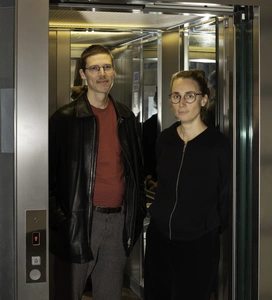
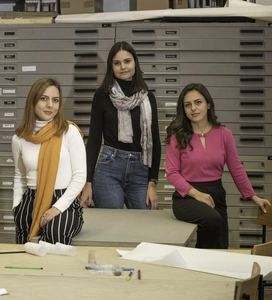
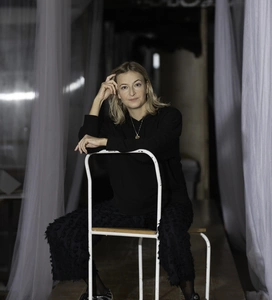
Three fellows applied their knowledge within reuse, sociology, architecture and material research in a new context and created a Sarajevo-specific reflection work. The residency focused on increasing opportunities to learn from each other through interdisciplinary cultural exchange and interaction, and by creating a culturally sensible approach opened possibilities for new perspectives for addressing the theme of Days of Architecture Biennial 2023.
Working closely with LINA Fellows in the Residency and Nights of architecture Sarajevo is highlighted as an important exchange of ideas and practices that will invigorate both their but also our views in the current issues in our societies. These knowledge exchanges will become a core strength for further development of their/our practices but also their/our impact on local communities. To underline the importance of LINA Fellows working with us in May 2023, they will further showcase their work in September 2023 during our Days of architecture Sarajevo 2023: The Olympics of Regenerative Architecture and will be invited to visit the festival and network with our lecturers, partners and audiences allowing for further dissemination.
Related fellows